Wǒ我
xiàn zài现在
hé péng you和朋友
yì qǐ zhù一起住
。
I currently live with a friend.
Fáng zū房租
bù tài guì不太贵
,
zuò chē坐车
qù gōng sī去公司
yě也
hěn fāng biàn很方便
。
The rent is not too expensive, and it is also convenient to travel to work.
Píng shí平时
,
wǒ men我们
huì会
yì qǐ一起
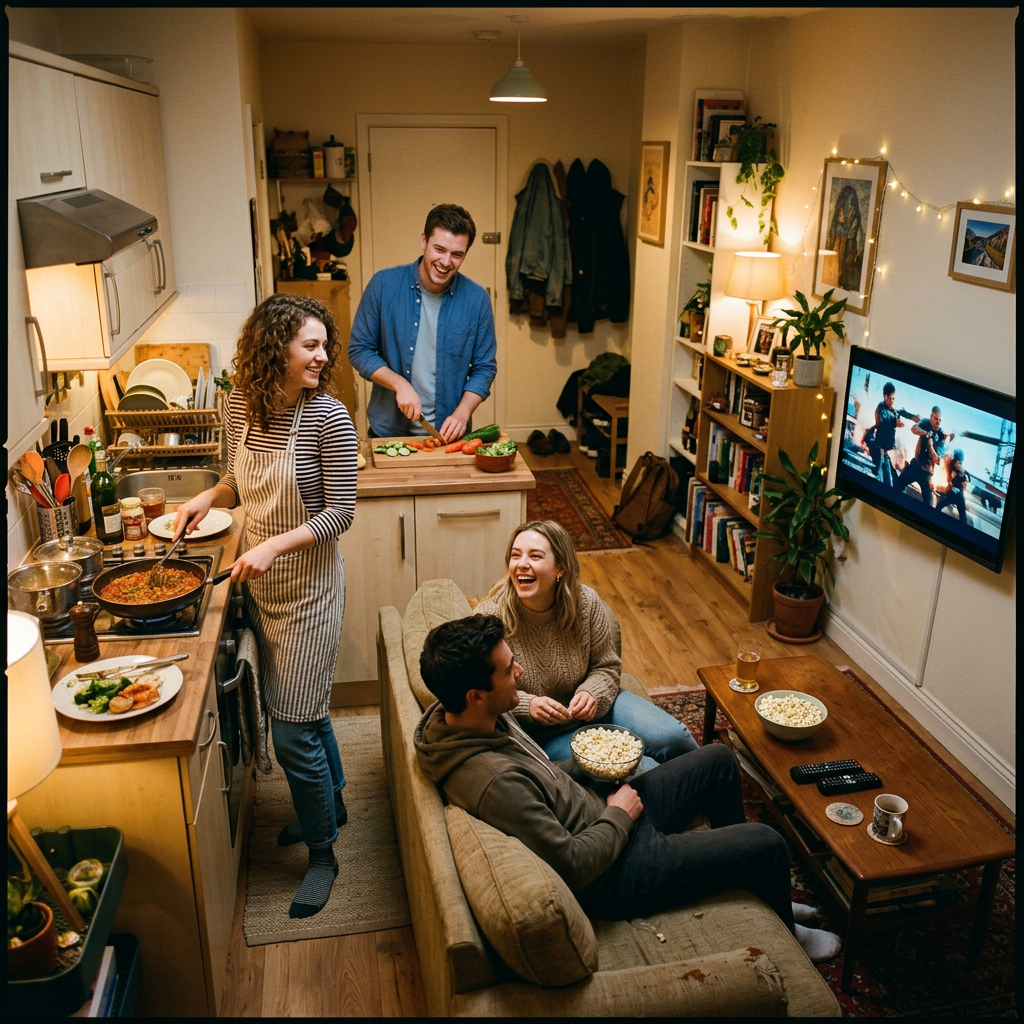
zuò fàn做饭
、
kàn diàn shì看电视
,
yě huì也会
yì qǐ一起
mǎi dōng xi买东西
。
Usually, we cook and watch TV together, and we also go shopping together.
Dàn shì但是
,
liǎng ge rén两个人
yì qǐ zhù一起住
yě yǒu也有
xiǎo wèn tí小问题
。
However, living together also comes with some small problems.
Yǒu shí hou有时候
wǒ我
xiǎng想
zǎo diǎn shuì早点睡
,
tā他
hái还
zài kè tīng在客厅
shuō huà说话
;
yǒu shí hou有时候
tā他
xiǎng想
zuò fàn做饭
,
wǒ我
zhèng zài正在
yòng chú fáng用厨房
。
Sometimes I want to go to bed early, but he is still talking in the living room; sometimes he wants to cook while I am using the kitchen.
Suī rán虽然
bú shì不是
měi tiān每天
dōu都
hěn fāng biàn很方便
,
dàn shì但是
wǒ jué de我觉得
yǒu rén有人
yì qǐ zhù一起住
,
yě bú huì也不会
tài wú liáo太无聊
。
Although living together is not convenient every day, I think having someone to live with means it will not be too boring either.
Take a step forward
Usage of 平时 (píngshí)
Meaning: Usually / Normally / In everyday life.
Context: Used to talk about someone’s normal habits, routines, or usual situation.
Structure:
平时,+ Subject + Verb Phrase
Subject + 平时 + Verb Phrase
Note: 平时 describes what normally happens, rather than what is happening only today or at one special time.
- • 平时,我们会一起做饭、看电视,也会一起买东西。
(Usually, we cook and watch TV together, and we also go shopping together. / From Text) - • 我平时六点下班。
(I usually finish work at six.) - • 他平时喜欢在家做饭。
(He usually likes cooking at home.)
Usage of 虽然……但是……也不会…… (suīrán… dànshì… yě bú huì…)
Meaning: Although… but… still will not… / Even though… it will not…
Context: Used to show contrast. The first part introduces a disadvantage or problem, while the second part gives a different result and often shows that the situation is not as negative as expected.
Structure:
虽然 + Situation A,但是 + Subject + 也不会 + Negative Result
Note: 虽然……但是…… introduces a contrast. 也不会 means “still will not” or “will not either” and emphasizes that a negative result does not happen despite the situation in the first part.
- • 虽然不是每天都很方便,但是我觉得有人一起住,也不会太无聊。
(Although living together is not convenient every day, I think having someone to live with means it will not be too boring either. / From Text) - • 虽然房子不大,但是两个人一起住也不会太挤。
(Although the apartment is not big, it still will not be too crowded for two people.) - • 虽然有时候会有小问题,但是一起生活也不会太麻烦。
(Although there are sometimes small problems, living together still will not be too troublesome.)