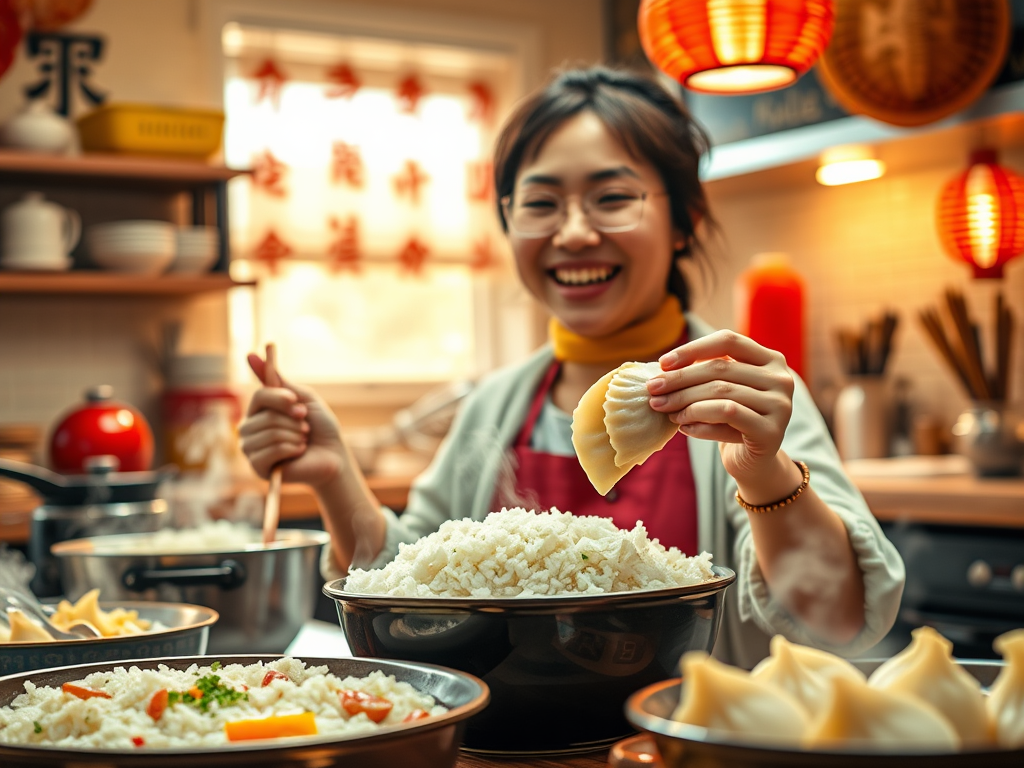
wǒ我
fēi cháng非常
xǐ huan喜欢
chī吃
Zhōng guó中国
cài菜
。
I really like eating Chinese food.
xiàn zài现在
,
wǒ我
měi tiān每天
dōu都
zài在
xué学
zuò cài做菜
。
Now I learn to cook every day.
zuó tiān昨天
,
wǒ我
zài jiā在家
xué学
zuò做
mǐ fàn米饭
。
Yesterday I learned to cook rice at home.
jīn tiān今天
wǒ我
qù去
xué xiào学校
xué学
zuò做
jiǎo zi饺子
。
Today I went to school to learn to make dumplings.
yǐ qián以前
wǒ我
bú huì不会
zuò cài做菜
,
xiàn zài现在
,
wǒ我
huì会
zuò做
sān gè三个
Zhōng guó中国
cài菜
le了
。
Before I couldn’t cook. Now I can cook three Chinese dishes.
Take a step forward
Usage of 在
Meaning:
- “To be (doing something).” It indicates an action in progress.
Context:
- Used before a verb to show that the action is happening right now or during a specific period.
Examples:
- 他在看书。
- He is reading a book.
- 妈妈在做饭。
- Mom is cooking.
- 同学们在听老师说话。
- The students are listening to the teacher.
Usage of 会
Meaning:
- “Can” or “Know how to.”
Context:
- Specifically used for skills that must be learned or studied (like languages, cooking, or driving).
Examples:
- 我会说汉语。
- I can speak Chinese.
- 你会开车吗?
- Do you know how to drive?
- 妹妹不会写字。
- My younger sister doesn’t know how to write.
Pinyin
Wǒ fēicháng xǐhuān chī Zhōngguó cài. Xiànzài, wǒ měitiān dōu zài xué zuò cài. Zuótiān, wǒ zài jiā xué zuò mǐfàn. Jīntiān wǒ qù xuéxiào xué zuò jiǎozi. Yǐqián wǒ bú huì zuò cài, xiànzài, wǒ huì zuò sān gè Zhōngguó cài le.
Translation
I like eating Chinese food very much. Now, I am learning to cook every day. Yesterday, I was at home learning to cook rice. Today I am going to school to learn to make dumplings. I didn’t know how to cook before, but now, I can cook three Chinese dishes.